Group

The digitalization of public administration is about to take a decisive step: the Germany stack is intended to overcome the fragmentation of administrative IT and strengthen digital sovereignty as a common basic digital architecture.
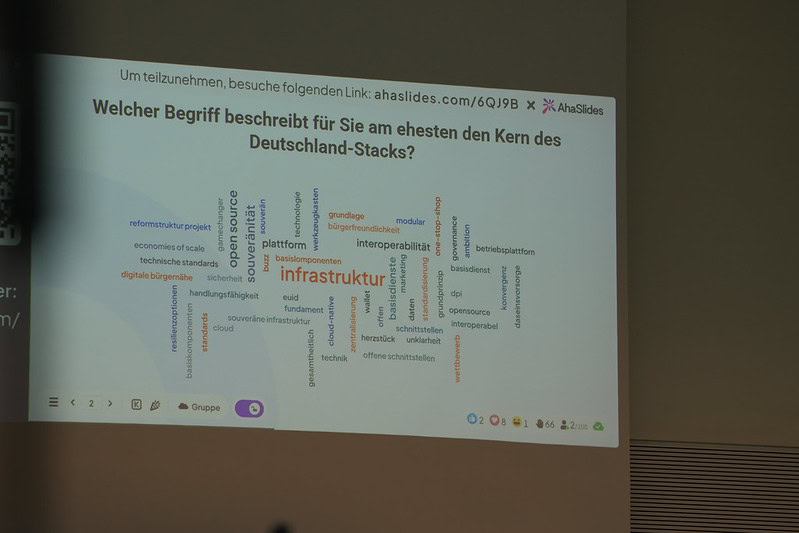
This consensus shaped the expert discussion „Germany stack: aspiration, architecture and implementation“ on April 22, 2026 in the German Bundestag. At the invitation of CDU MPs Ralph Brinkhaus and Henri Schmidt, representatives from politics, administration, business and civil society - including Jutta Horstmann, Co-CEO of the Heinlein Group - discussed the future of digital sovereignty in public administration.
Interest in the topic was so great that the event had to be moved at short notice to the large conference room of the CDU/CSU parliamentary group had to be relocated. The hosts focused on a variety of perspectives: In addition to Thomas Jarzombek (Parliamentary State Secretary, BMDS) and Christina Decker (BMDS) brought Claudia Alsdorf (black digits) and Dr. Stefan Heumann (Agora Digital Transformation) provides economic and civil society impetus.
The Heinlein Group has been an active driver of sovereign IT infrastructures in public administration for years. Back in December 2025, Jutta Horstmann, Co-CEO of the Heinlein Group and spokesperson for the Public Affairs working group of the Open Source Business Alliance (OSBA), organized a workshop at the Federal Ministry for Digital and State Modernization. There, we brought together stakeholders from the administration, associations and the open source community to discuss key requirements for the German stack.
The Heinlein Group is committed to ensuring that open source software, open standards and open interfaces are anchored in the German stack. This is the only way that authorities can independently check what their software is doing, identify security gaps and make adjustments. Closed-source solutions create dependencies - this is exactly what the Deutschland-Stack aims to overcome.
Jutta Horstmann also took part in the expert discussion in the Bundestag and contributed the perspective of the open source industry. The discussion showed that the biggest challenge lies not in the technology, but in federal enforcement. The following points were particularly emphasized:
Open source has been recognized as a strategic lever for digital sovereignty. Pragmatism is necessary: Existing dependencies cannot be replaced immediately, but open standards and switching options must be a priority.
The long-term financing of the stack is still unclear - especially for operation, maintenance and subsequent use in federal states and municipalities. Without binding usage obligations, the stack threatens to remain a non-binding wish list.
Companies signal their willingness to participate, but demand it:
Reliable roadmaps
Transparent award criteria
Clear migration paths
The expert discussion confirmed that the German stack is not a purely technical project, but a question of Germany's digital capacity to act. The Heinlein Group remains a key player in this process - with open source solutions, expertise in federal implementation issues and a commitment to European standards.